Guided Imagery for Relaxation: A Calm Place Script
Learn guided imagery meditation with a step-by-step calm place script, a shorter version for busy days, and tips for building your own relaxing scene.
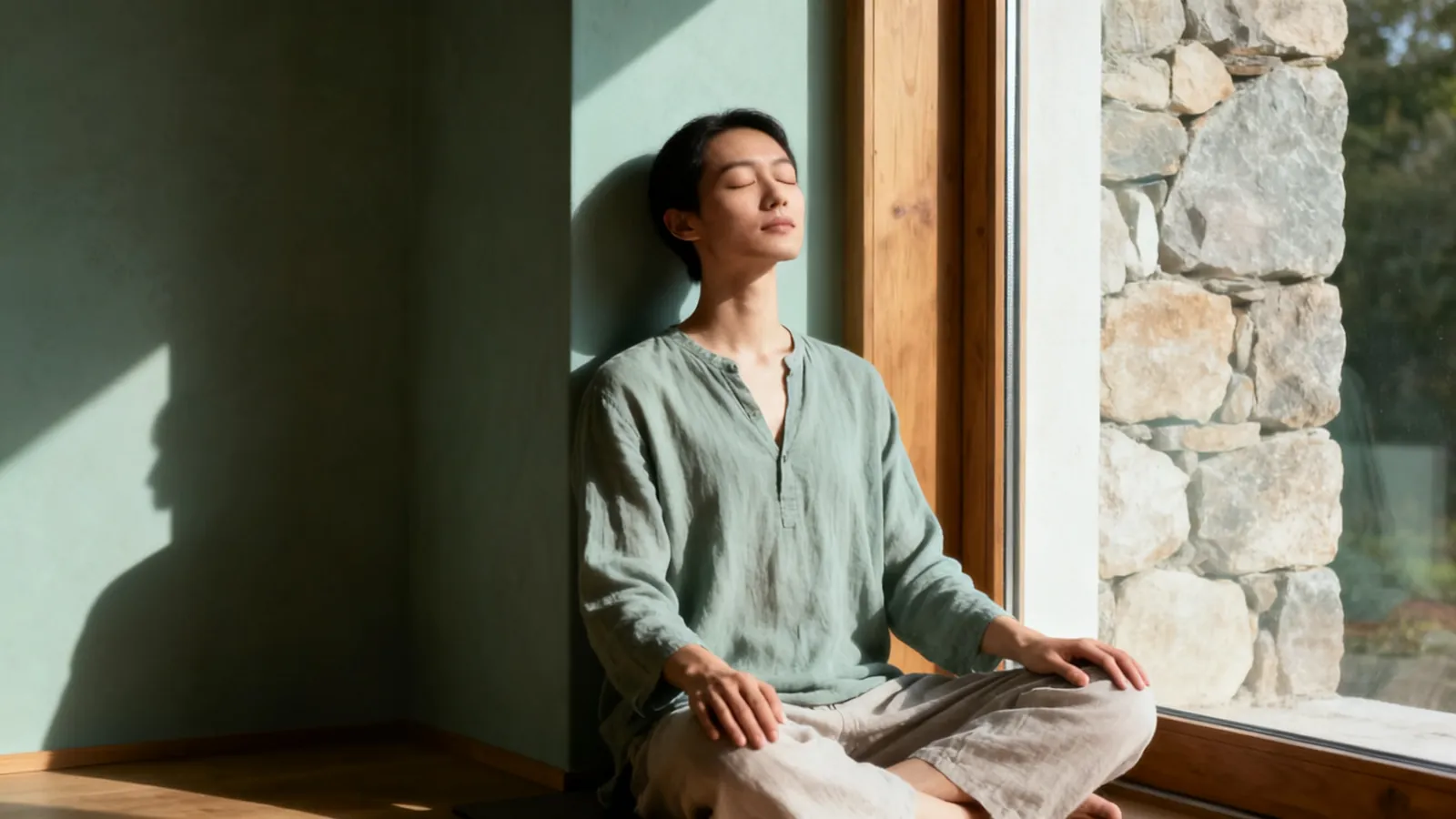
Guided imagery is a relaxation practice that uses the imagination to create a detailed, calming scene in the mind. During guided imagery meditation, you picture a place that feels safe and pleasant, then slowly add sensory details: what you see, hear, feel, smell and taste. The aim is not to escape reality but to give the nervous system a rest from alertness. Many people find that this kind of guided meditation for relaxation is easier than breath-focused practice because it gives the mind a clear, gentle task instead of asking it to empty.
What guided imagery is and how it works
Guided imagery is sometimes called visualization, but it does not require vivid pictures. You can imagine textures, sounds or temperatures just as well. The practice works by occupying attention with neutral or pleasant sensory information. When attention is absorbed in a calm scene, the body often follows: breathing slows, muscle tension drops and the mind has less room for repetitive worry. This is why guided imagery for anxiety is often taught alongside breathing and progressive muscle relaxation.
A guided imagery meditation can be led by a teacher, an audio track or your own written script. The version below is a script you can read silently or record for yourself. It takes about eight to ten minutes. There is also a shorter version for days when time is tight.
A short guided imagery script to try now
Find a comfortable seat or lie down. Let the surface support your weight. Close your eyes if that feels comfortable, or soften your gaze toward the floor. Take two or three natural breaths, without changing their depth.
Now picture a place where you feel at ease. It can be real or imagined: a garden, a quiet room, a shoreline, a path through trees. Let the first image be simple. Notice one color in that place. Notice one shape.
Add sound. Perhaps it is wind moving through leaves, water lapping, or complete quiet. Let the sound be steady and low.
Add touch. Feel the ground under you, the air on your skin, the texture of what you are sitting or lying on. If the scene has warmth, let it spread across your shoulders and hands.
Add smell and taste if they come. Maybe cut grass, rain on stone, or nothing at all. There is no need to force these senses.
Stay in this scene for five to ten slow breaths. If your mind wanders to a task or a worry, notice that, then return to one detail in the scene: a color, a sound, a texture. Wandering is normal and not a failure.
When you are ready, take one fuller breath, feel your body against the surface beneath you, and open your eyes. Move slowly.
A shorter version for a busy day
Sit where you are. Close your eyes or look down. Picture one calm image: a single tree, a window with rain, a candle flame. Hold it for three breaths. Add one sound and one physical sensation. Stay for two more breaths. Open your eyes. This takes under a minute and can be repeated later in the day.
Building your own calm place with all five senses
A calm place becomes easier to return to when it has specific, repeatable details. Use the list below to build one. Write your answers down once, then you can recall the scene without notes.
| Sense | What to choose | Example detail |
|---|---|---|
| Sight | One or two colors, one shape, light quality | Soft grey light, a low stone wall |
| Sound | A steady, low sound or silence | Distant water, wind in dry leaves |
| Touch | Temperature, texture, pressure | Cool air on the face, firm ground underfoot |
| Smell | A single familiar scent, or none | Rain on warm pavement |
| Taste | A faint taste, or none | Clean water |
Keep the scene simple. A calm place with too many details can become distracting. Two or three sensory anchors are enough. The same scene can be used each time, which makes it quicker to enter.
Guided imagery compared with other relaxation practices
Different practices suit different people and situations. The table below compares guided imagery with two common alternatives.
| Practice | What it involves | Fits well when | Does not fit well when |
|---|---|---|---|
| Guided imagery | Picturing a calm scene with sensory detail | The mind is busy and needs a gentle task; you prefer images to numbers | You feel too agitated to hold an image; you are driving or need full attention elsewhere |
| Breath-focused meditation | Following the physical sensation of breathing | You want something always available and very simple | Focusing on breath makes you more anxious or lightheaded |
| Progressive muscle relaxation | Tensing and releasing muscle groups in order | You carry tension in the body and want a physical anchor | You have an injury or pain in the area being tensed |
Guided imagery is often a good first step for people who find breath-focused practice frustrating. It gives the mind a scene to explore rather than a single point to hold.
Who tends to find guided imagery easier
Guided imagery meditation can suit people who think in pictures, but it also suits anyone who prefers a gentle mental task to a physical one. It is often used by people who:
- Find breath-focused meditation boring or irritating
- Feel restless when asked to sit with no focus
- Have a strong imagination or enjoy stories
- Want a practice they can do with eyes open in a waiting room or on public transport
- Are working with a therapist who uses imagery as part of a broader approach
It is not necessary to see clear pictures. Some people experience the scene as a set of feelings or sounds. That still counts.
What people get wrong
A few common mistakes can make guided imagery feel harder than it is.
Trying to make the scene perfect
The scene does not need to be beautiful or detailed. A plain room with one window can work. The goal is a neutral, steady focus, not a masterpiece.
Forcing images when the mind is too active
On some days, the mind will not settle into an image. That is not a sign that the practice has failed. It may be a day for a shorter version, a physical practice like progressive muscle relaxation, or simply a pause. Forcing an image usually adds tension.
Using a scene that carries difficult associations
A place that once felt calm may now bring up sadness or worry. If a scene starts to feel uncomfortable, leave it and choose a neutral one, such as a simple room or a path. If difficult memories or feelings keep coming up during relaxation, it can help to speak with a mental health professional.
Expecting immediate silence
Guided imagery does not stop thoughts. It gives them somewhere else to rest. Many people notice a small drop in tension rather than a completely quiet mind. That is a normal result.
When guided imagery may not help
Guided imagery is a relaxation practice, not a treatment for a medical or mental health condition. It does not cure, treat or reverse anxiety, depression, insomnia, panic or burnout. Some people find it calming; others do not. If a scene brings on dizziness, lightheadedness or a racing heart, stop and breathe normally. People who are pregnant or have a heart or lung condition should check long breath holds with their clinician before trying practices that include them.
If anxiety, panic, low mood or sleep problems are persistent or are affecting daily life, see a doctor or a mental health professional. If there is urgent distress or any thought of self-harm, contact local emergency services right away.
How to use guided imagery in a daily routine
Guided imagery can be used at different points in the day. A short version in the morning can set a steadier tone. A longer script in the evening can be part of winding down before sleep. It can also be used during a break at work, before a difficult conversation, or after a stressful commute.
A simple routine:
- Morning: one calm image for three breaths.
- Midday: the same image for five breaths if tension is rising.
- Evening: the full script, or a recorded version, for eight to ten minutes.
Consistency matters more than length. A one-minute practice done most days is more useful than a twenty-minute practice done once. If the practice becomes a chore, shorten it until it feels manageable again.
FAQ
What is guided imagery meditation? Guided imagery meditation is a relaxation practice where you picture a calm scene and add sensory details such as sound, texture and temperature. It is often led by a script, an audio track or a teacher. The aim is to give the mind a gentle focus so the body can settle.
Can guided imagery help with anxiety? Many people find that guided imagery for anxiety helps them feel calmer by shifting attention away from worried thoughts. It is not a treatment for anxiety disorders. If anxiety is persistent or interferes with daily life, speak with a doctor or mental health professional.
How long should a guided imagery session be? A full session can be eight to ten minutes, but a shorter version of one to three minutes is also useful. Beginners often do better with shorter sessions at first. The practice can be extended as it becomes more familiar.
What if I cannot picture anything? You do not need clear pictures. Focus on sound, touch or temperature instead. Some people experience the scene as a feeling rather than an image. Any sensory detail that feels neutral or pleasant can be used.
Is guided imagery the same as guided meditation for relaxation? They overlap. Guided meditation for relaxation may use breath, body scan or imagery. Guided imagery is specifically built around a mental scene. Both are relaxation practices and neither replaces medical or mental health care.
Common questions
What is guided imagery meditation?
Guided imagery meditation is a relaxation practice where you picture a calm scene and add sensory details such as sound, texture and temperature. It is often led by a script, an audio track or a teacher. The aim is to give the mind a gentle focus so the body can settle.
Can guided imagery help with anxiety?
Many people find that guided imagery for anxiety helps them feel calmer by shifting attention away from worried thoughts. It is not a treatment for anxiety disorders. If anxiety is persistent or interferes with daily life, speak with a doctor or mental health professional.
How long should a guided imagery session be?
A full session can be eight to ten minutes, but a shorter version of one to three minutes is also useful. Beginners often do better with shorter sessions at first. The practice can be extended as it becomes more familiar.
What if I cannot picture anything?
You do not need clear pictures. Focus on sound, touch or temperature instead. Some people experience the scene as a feeling rather than an image. Any sensory detail that feels neutral or pleasant can be used.
Is guided imagery the same as guided meditation for relaxation?
They overlap. Guided meditation for relaxation may use breath, body scan or imagery. Guided imagery is specifically built around a mental scene. Both are relaxation practices and neither replaces medical or mental health care.
Read next

How to Calm Your Nervous System: A Practical Guide
Learn how to calm your nervous system with simple techniques like long exhales, cold water, and slow walking. A step-by-step guide for everyday stress.
How to Relax When You Can't Switch Off
Learn how to relax when your body is tired but your mind stays wired. A ten-minute practice with breath, movement, warmth, and a shorter version for busy days.
Meditation for Stress: A Beginner's Guide
Learn a simple meditation for stress you can do in five minutes. Step-by-step script, a shorter version for busy days, and what to expect when starting.