Meditation for Stress: A Beginner's Guide
Learn a simple meditation for stress you can do in five minutes. Step-by-step script, a shorter version for busy days, and what to expect when starting.
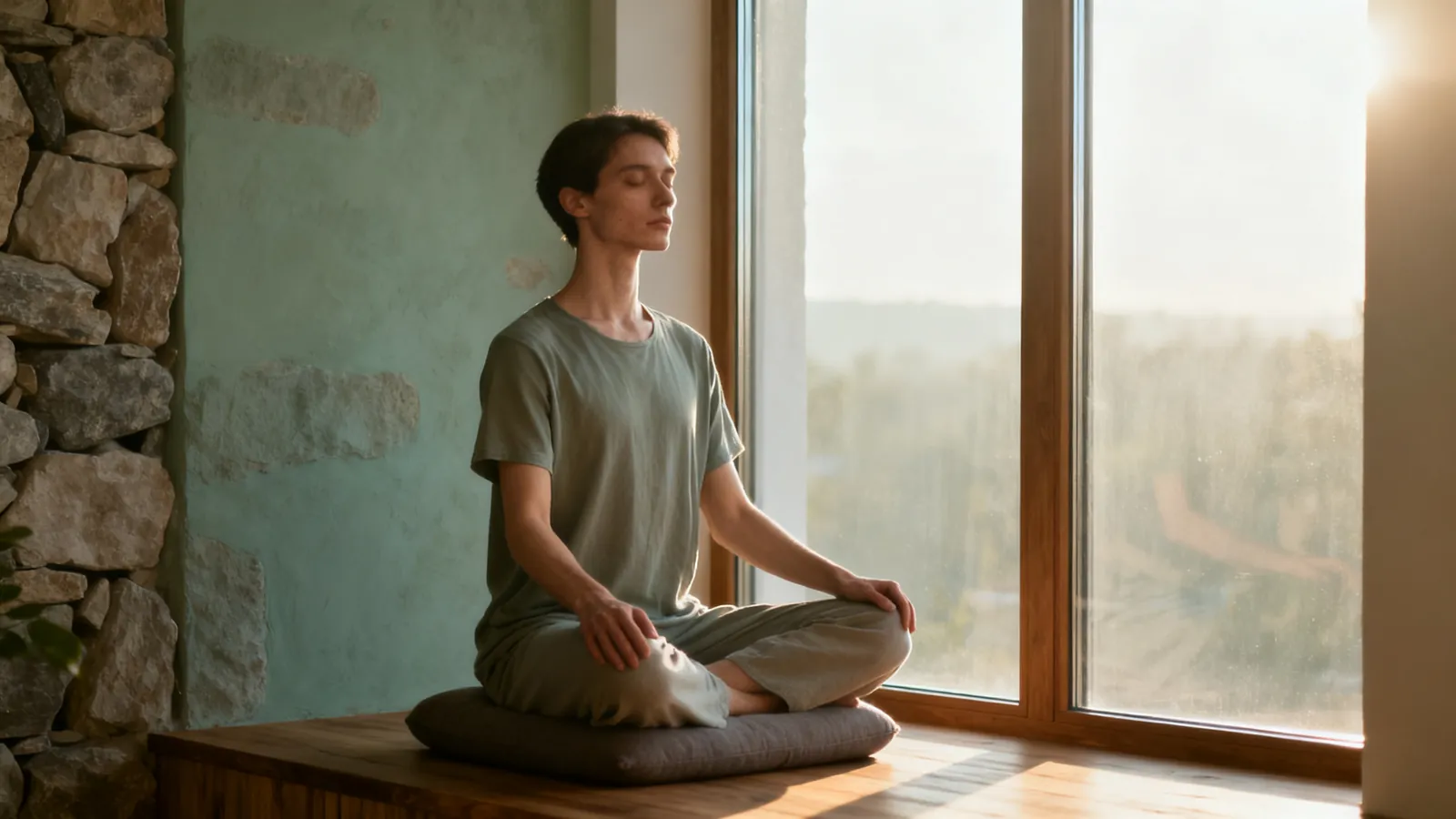
Meditation for stress is a practice of training attention. You sit still, choose something to focus on — usually the breath — and each time the mind wanders, you bring it back. The wandering is not a failure. Noticing it and returning is the repetition that builds the skill. Over time, many people find they can meet stressful moments with a little more steadiness and a little less reactivity.
This guide covers how to start without an app, a cushion, or a retreat. It includes a five-minute script you can follow now, a one-minute version for busy days, and notes on what tends to help after the first week.
What meditation for stress actually is
Stress relief meditation is not about emptying the mind. Thoughts will keep coming. The practice is noticing that attention has drifted and gently bringing it back to a chosen anchor. That return is the whole exercise.
There are two common modes:
- Focused attention: you keep attention on one thing — the feeling of the breath at the nostrils, the rise and fall of the chest, or a word repeated silently. When the mind wanders, you return to that one thing.
- Open awareness: you let attention rest on whatever is most noticeable — sounds, physical sensations, thoughts — without chasing or pushing anything away. When you get caught up, you soften and return to the wider field of awareness.
Beginners usually start with focused attention because it gives the mind a clear job. Open awareness can come later, once returning to an anchor feels more familiar.
How to sit (and why posture matters less than you think)
You do not need to sit cross-legged on the floor. The posture should be alert and comfortable enough that you are not fighting physical discomfort the whole time.
- On a chair: sit toward the front edge, feet flat on the floor, back upright but not rigid. Let the hands rest on the thighs.
- On a cushion: cross the legs loosely or kneel with a cushion between the heels and the seat. If the knees hurt, raise the cushion or switch to a chair.
- Lying down: fine for some people, but it often leads to sleepiness. If you try it, keep the eyes slightly open and the room cool.
Eyes can be closed or softly open, gazing a few feet ahead. Closed eyes reduce visual distraction; open eyes help prevent drowsiness. Try both and keep what works.
A five-minute meditation for stress
Set a timer for five minutes. A kitchen timer or phone on silent is fine. Read through the script once, then try it.
- Settle (30 seconds). Sit down. Feel the weight of the body on the chair or cushion. Let the shoulders drop. Take two or three slower breaths, letting the exhale be a little longer than the inhale.
- Choose an anchor (10 seconds). Pick one place to follow the breath: the coolness at the nostrils, the movement of the chest, or the belly rising and falling. Choose one and stay with it.
- Follow the breath (about 3 minutes). Notice the inhale. Notice the exhale. There is no need to control the breath. When you notice the mind has wandered — to a conversation, a worry, a plan — that is the moment of awareness. Quietly label it “thinking” if that helps, then return to the breath. You might do this dozens of times in five minutes. That is normal and it is the practice.
- Widen attention (1 minute). Let the breath move to the background. Notice sounds, the temperature of the room, the contact of the body with the seat. Let everything be as it is.
- Close (30 seconds). Take one slower breath. Notice how the body feels compared with when you sat down. Open the eyes if they were closed. Stand up when ready.
If dizziness or lightheadedness comes up, stop and breathe normally. People who are pregnant or have a heart or lung condition should check longer breath holds with their clinician.
A one-minute version for a busy day
When five minutes is not available, use this shorter version. It is the same skill in miniature.
- Stop what you are doing. Put both feet on the floor.
- Take three slow breaths, letting each exhale be longer than the inhale.
- For the next thirty seconds, follow the feeling of the breath at the nostrils. When the mind wanders, bring it back once.
- Notice one thing you can hear and one thing you can feel.
- Continue with your day.
One minute does not replace a longer practice, but it keeps the habit alive on crowded days.
Focused attention vs open awareness: which to choose
| Practice | Best for | How it feels | When it does not fit |
|---|---|---|---|
| Focused attention on the breath | Beginners, busy minds, short sessions | Structured; the mind has a clear task | When you are so agitated that following one thing feels impossible — try open awareness or a walk instead |
| Open awareness | After some familiarity with focused attention; when you want to observe thoughts without fighting them | Spacious; easier to get lost in thought at first | When you are very tired or stressed and need an anchor to steady attention |
| Body scan (lying or seated) | Tension that shows up physically; before sleep | Slow; moves attention through the body | When lying down leads to sleep rather than alertness |
| Walking meditation | Restless energy; days when sitting feels too hard | Active; attention on the feet and movement | When you need to be still and quiet, or when the environment is too distracting |
There is no single right choice. Many people rotate between two or three depending on the day.
What people get wrong
Expecting the mind to go blank. Thoughts are not the enemy. The moment you notice you are thinking is the moment the practice is working. Returning is the repetition.
Judging the session. A session with many returns is not a bad session. It is a session where the skill was used many times. A session where the mind felt calm is pleasant, but it is not the measure of progress.
Skipping the anchor. Some beginners try to watch everything at once and end up lost in thought for the whole session. Start with one anchor — the breath is the most portable — and stay with it until returning feels natural.
Chasing a feeling. Meditation for stress and anxiety is not a technique for producing calm on demand. Calm sometimes comes; sometimes it does not. The practice is showing up and returning, regardless of what the session feels like.
Making it too long too soon. Ten minutes daily tends to be more useful than an hour once a week. Start with five minutes and add a minute or two only when five feels steady.
When meditation does not help
Meditation is a self-regulation practice, not a treatment. It can help you feel calmer in everyday stress, but it does not cure, treat, or reverse anxiety, depression, insomnia, panic, burnout, or any other condition. If stress is persistent, if sleep is disrupted for weeks, if anxiety interferes with work or relationships, or if you feel unable to cope, see a doctor or a mental health professional. If you are in urgent distress or having thoughts of self-harm, contact local emergency services right away.
Some people find that meditation makes them more aware of difficult thoughts at first. If that happens, shorten the session, keep the eyes open, and consider working with a qualified meditation teacher or mental health professional. If a practice increases distress, stop and seek support.
Keeping going after the first week
The first week is often the easiest because it is new. The second week is where many people stop. A few things that help:
- Same time, same place. Attach the practice to something you already do — after morning coffee, before brushing teeth at night. The cue does the remembering for you.
- Five minutes is enough. Do not wait for a calm day or a free hour. A short session on a difficult day counts more than a long session on a perfect one.
- Use the one-minute version on busy days. It keeps the thread going.
- Track it simply. A mark on a calendar is enough. Looking back at a week of marks can be more motivating than how any single session felt.
- Try a guided audio if sitting alone feels hard. A voice can carry attention when it keeps slipping. Apps are optional, not required.
Many people find that after a few weeks, the pause between a stressful trigger and their reaction grows a little wider. That pause is often the most noticeable change — not a dramatic shift, but a small space that was not there before.
Common questions
How long should I meditate for stress relief?
Five minutes is a good starting point. Many people find that a short daily session is more useful than a long one once a week. Add a minute or two only when five minutes feels steady.
What do I do when my mind wanders during meditation?
Notice that it wandered, quietly label it "thinking" if that helps, and return to the breath. That return is the practice, not a failure. You might do it dozens of times in one session.
Can meditation help with stress and anxiety?
Many people find that meditation can help them feel calmer and less reactive in stressful moments. It is not a treatment for anxiety or any other condition. If anxiety interferes with daily life, speak with a doctor or mental health professional.
Do I need an app or a teacher to start meditating?
No. A timer and a chair are enough. Guided audio can help if sitting alone feels difficult, and a teacher can be useful if the practice brings up distressing thoughts, but neither is required to begin.
What is the difference between focused attention and open awareness?
Focused attention keeps the mind on one anchor, usually the breath. Open awareness lets attention rest on whatever is most noticeable — sounds, sensations, thoughts — without chasing anything. Beginners often start with focused attention because it gives the mind a clear task.
Read next

How to Calm Your Nervous System: A Practical Guide
Learn how to calm your nervous system with simple techniques like long exhales, cold water, and slow walking. A step-by-step guide for everyday stress.
Guided Imagery for Relaxation: A Calm Place Script
Learn guided imagery meditation with a step-by-step calm place script, a shorter version for busy days, and tips for building your own relaxing scene.
How to Relax When You Can't Switch Off
Learn how to relax when your body is tired but your mind stays wired. A ten-minute practice with breath, movement, warmth, and a shorter version for busy days.