Box Breathing: How to Do the Four-Equal-Sides Method
Learn box breathing: inhale, hold, exhale, hold, each for four counts. Step-by-step guide, beginner adjustments, and when to use it.
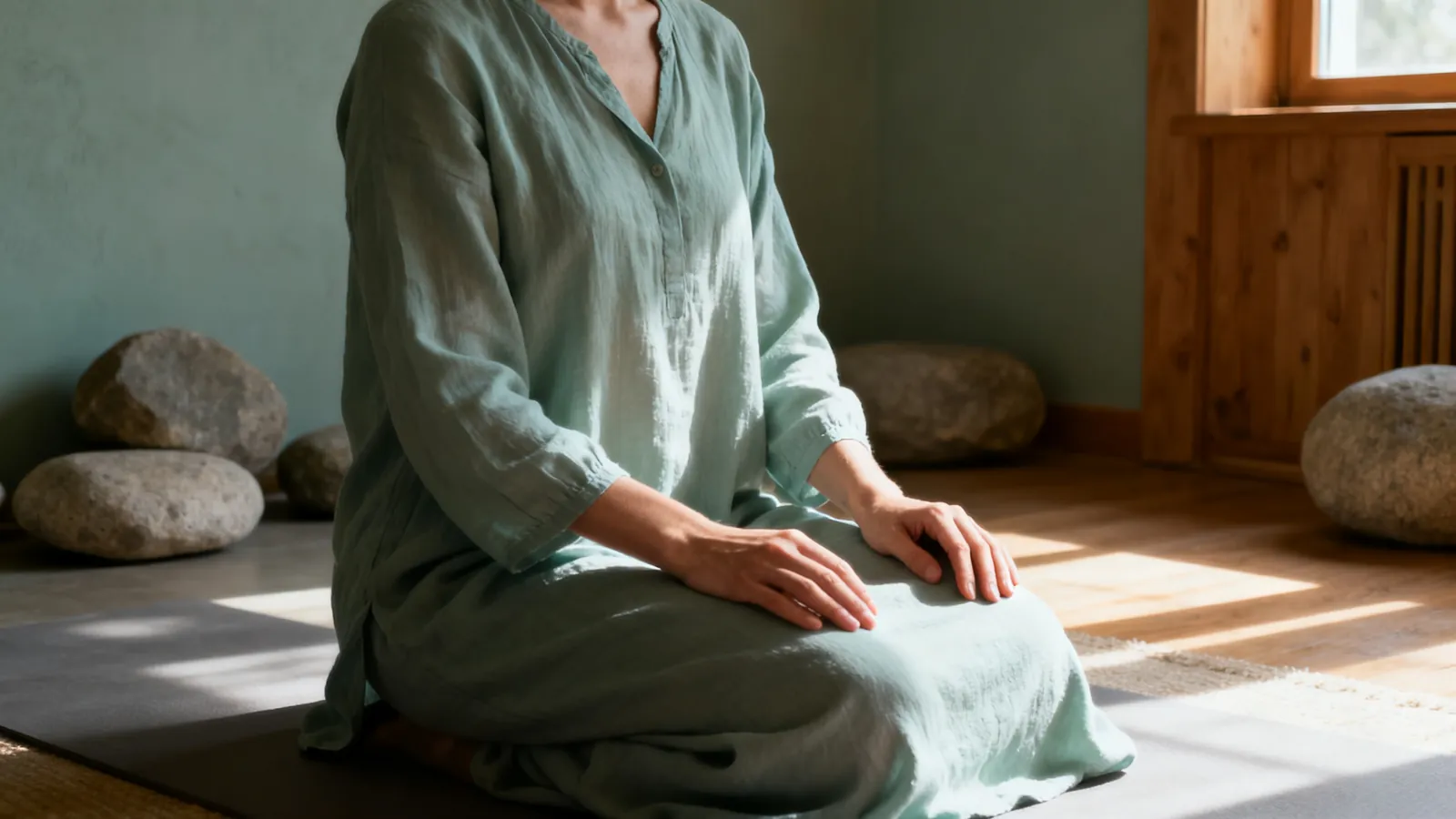
Box breathing is a paced breathing exercise built on four equal parts: breathe in, hold, breathe out, hold. Each part lasts the same number of counts, which is where the name comes from — the four sides of a square. The pattern is sometimes called square breathing. It is used in settings where people need to steady themselves quickly: before a presentation, during a tense commute, or at a desk between tasks. The practice does not require equipment, an app, or a quiet room. It can be done sitting, standing, or lying down, with eyes open or closed.
The method is popular because the structure is easy to remember. Four counts in, four counts holding, four counts out, four counts holding. That rhythm gives the mind something concrete to follow, which many people find easier than simply “relaxing.” The holds are not breath-holding contests; they are brief pauses at the top and bottom of the breath. If four seconds feels too long, the counts can be shortened to three or two. The equal ratio matters more than the number itself.
How to do box breathing
Step-by-step
- Sit upright or lie down. Let the shoulders drop away from the ears. Rest one hand on the belly if it helps track the breath.
- Breathe in through the nose for a count of four. Let the belly rise first, then the ribs.
- Hold the breath gently for a count of four. Do not clamp the throat or bear down.
- Breathe out through the nose or mouth for a count of four. Let the exhale be smooth, not forced.
- Hold empty for a count of four. Stay relaxed; do not push the last of the air out.
- Repeat the cycle for four to five rounds, or for about two minutes.
A round is one complete square: in, hold, out, hold. Beginners often start with three rounds and build up. The whole practice can take less than two minutes, which is why it fits into small gaps in the day.
Beginner version
If four counts on the inhale feels rushed, or the holds feel uncomfortable, shorten every side to three counts. If that still feels like too much, use two counts. The goal is a smooth, unforced rhythm. Some people prefer to skip the holds entirely at first and simply breathe in for four and out for four, then add the pauses once that feels natural.
How long and how often
A common approach is four to five rounds, once or twice a day, or as needed before a stressful moment. Some people do it for two minutes in the morning and again before bed. There is no required duration. A single round can be enough to feel a shift. Consistency matters more than length: a short practice done regularly tends to be easier to remember under pressure than a long one done rarely.
What it feels like the first time
The first round often feels mechanical because the mind is busy counting. By the second or third round, many people notice the shoulders softening and the breath becoming quieter. The holds can feel strange at first, especially the pause after the exhale. That pause is usually the part that feels most unfamiliar. If the counting makes you tense, try counting silently and letting the numbers fade into the background.
The dizziness rule
Stop and breathe normally if the exercise brings on dizziness, lightheadedness, or tingling in the hands or face. These sensations can happen when breathing becomes too deep or too fast, or when holds are too long. Return to your usual breathing and let the feeling pass. People who are pregnant or who have a heart or lung condition should check long breath holds with their clinician before practicing.
Where people use box breathing
The method fits into moments when there is no time for a longer practice.
- Before a talk or meeting. One or two rounds in the minutes before speaking can steady the voice and slow the heart rate.
- At a desk. A single round between tasks can break the cycle of shallow breathing that builds during focused work.
- In traffic or on public transport. The pattern is invisible to others and can be done with eyes open.
- Before sleep. A few rounds in bed can help the body shift out of a busy day. If it makes you more alert, try it earlier in the evening instead.
- After a startling moment. The structure gives the mind something to follow when thoughts are racing.
Box breathing compared with other paced breathing methods
| Method | Pattern | Typical use | When it may not fit |
|---|---|---|---|
| Box breathing | In 4, hold 4, out 4, hold 4 | Steadying before a stressful moment; short reset at a desk | If holds feel uncomfortable or cause dizziness; if you need a longer wind-down |
| 4-7-8 breathing | In 4, hold 7, out 8 | Evening wind-down; helping the body settle before sleep | The long hold and exhale can feel like too much for beginners; not ideal when you need to stay alert |
| Plain slow breathing | In 4, out 6 (or similar) | General calming; easy to do anywhere, no holds to remember | Some people find the lack of structure harder to follow; less engaging for a racing mind |
Box breathing and 4-7-8 both use counts, but the ratios differ. Box breathing keeps all four sides equal, which makes it symmetrical and easy to recall. 4-7-8 puts the emphasis on a long exhale, which many people find more settling in the evening. Plain slow breathing removes the holds altogether, which suits anyone who finds pauses uncomfortable.
What people get wrong
A few common mistakes make box breathing feel harder than it needs to be.
- Forcing the holds. The pauses should be gentle. Straining or bearing down creates tension and can make dizziness more likely.
- Breathing too deeply. Big, forceful breaths can lead to lightheadedness. Aim for a normal-sized breath, just paced.
- Chasing the count. If four counts feels too long, the answer is a shorter count, not more effort. The equal ratio is the point.
- Expecting instant calm. The first round may feel neutral. Many people notice the effect after two or three rounds, or after practicing for a few days.
- Using it for everything. Box breathing is one tool among several. If it does not suit a particular moment, plain slow breathing or a longer wind-down practice may fit better.
When box breathing may not help
Box breathing is a self-regulation practice, not a treatment for a medical or mental health condition. Many people find it calming, but it is not a substitute for professional care. If stress, worry, or sleep problems are persistent, or if they interfere with daily life, speak with a doctor or a mental health professional. If you are in urgent distress or having thoughts of self-harm, contact local emergency services right away.
Some people simply do not take to paced breathing with holds. That is common and not a failure. Alternatives include slow breathing without pauses, progressive muscle relaxation, or a body scan. The best practice is the one that feels manageable enough to repeat.
Questions people ask
How many rounds of box breathing should I do?
Four to five rounds is a common starting point, which takes about two minutes. Some people do one round before a stressful moment and a longer set in the evening. There is no fixed number; stop if it stops feeling comfortable.
Can I do box breathing lying down?
Yes. Lying down is fine, especially before sleep. Some people find it easier to stay awake if they practice sitting up. Either position works as long as the breath stays smooth.
What if I cannot hold my breath for four seconds?
Shorten every side to three counts, or two. The equal ratio matters more than the number. If holds still feel uncomfortable, skip them and breathe in and out for equal counts instead.
Is box breathing the same as square breathing?
Yes. Box breathing and square breathing describe the same four-part pattern: in, hold, out, hold, each for an equal count. The names are used interchangeably.
How is box breathing different from 4-7-8?
Box breathing uses four equal sides. 4-7-8 uses a short inhale, a longer hold, and a longer exhale. Box breathing tends to be used for steadying before a task; 4-7-8 is often used in the evening because the extended exhale feels more settling for some people.
Common questions
How many rounds of box breathing should I do?
Four to five rounds is a common starting point, which takes about two minutes. Some people do one round before a stressful moment and a longer set in the evening. There is no fixed number; stop if it stops feeling comfortable.
Can I do box breathing lying down?
Yes. Lying down is fine, especially before sleep. Some people find it easier to stay awake if they practice sitting up. Either position works as long as the breath stays smooth.
What if I cannot hold my breath for four seconds?
Shorten every side to three counts, or two. The equal ratio matters more than the number. If holds still feel uncomfortable, skip them and breathe in and out for equal counts instead.
Is box breathing the same as square breathing?
Yes. Box breathing and square breathing describe the same four-part pattern: in, hold, out, hold, each for an equal count. The names are used interchangeably.
How is box breathing different from 4-7-8?
Box breathing uses four equal sides. 4-7-8 uses a short inhale, a longer hold, and a longer exhale. Box breathing tends to be used for steadying before a task; 4-7-8 is often used in the evening because the extended exhale feels more settling for some people.
Read next
4-7-8 Breathing: How to Do the Technique
Learn the 4-7-8 breathing pattern step by step: exact counts, a beginner version, how long to practise, what to expect and when to stop.
Diaphragmatic Breathing: A Step-by-Step Guide
Learn diaphragmatic breathing with step-by-step instructions. Discover how to tell chest from belly breathing, a lying-down practice, and a seated version.

Breathing Exercises for Stress: A Practical Guide
Learn five breathing exercises for stress: slow exhale, box breathing, 4-7-8, belly breathing, and the physiological sigh, with counts, timings, and safety notes.